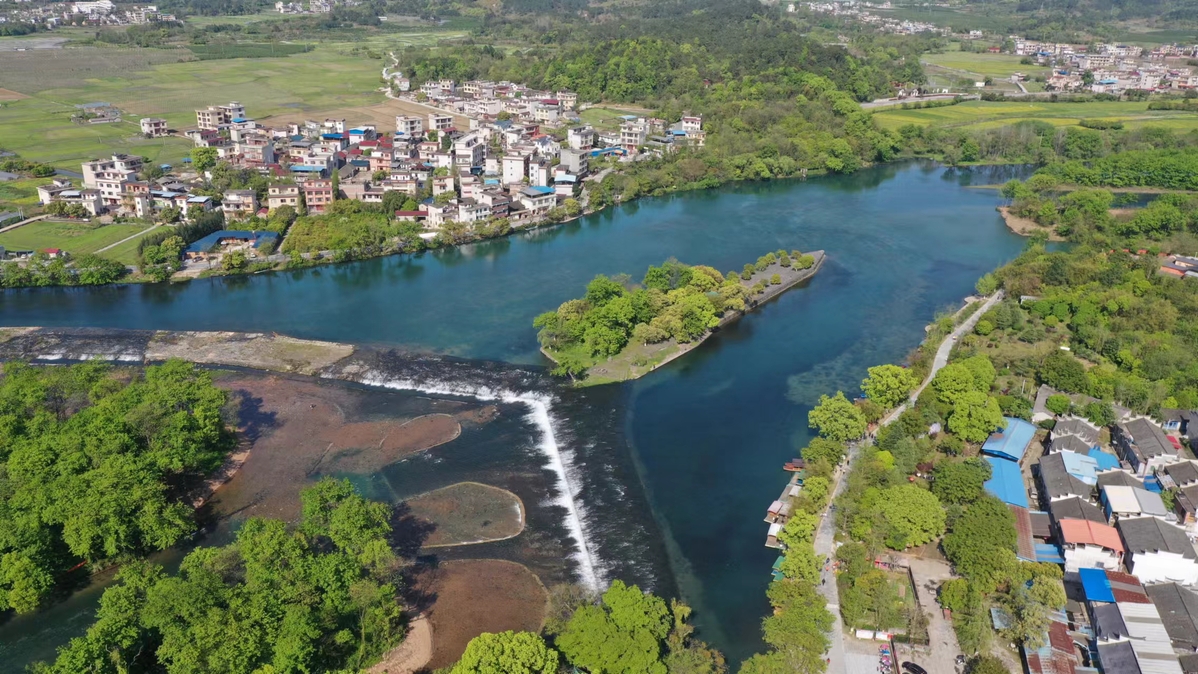
The Lingqu Canal
Introduction
The Lingqu Canal, located in Xing'an County, Guilin City, Guangxi Province, China, is a historic man-made canal renowned as the "Pearl of the World's Ancient Water Conservancy Architecture." Constructed over 2,000 years ago during the Qin Dynasty, the canal remains an operational marvel of ancient engineering. Its initial purpose was military, facilitating grain transport for Emperor Qin's campaigns against the Baiyue peoples. Over time, the canal's functions expanded to include shipping, irrigation, flood control, water replenishment for the Lijiang River, and tourism. The canal is a vital link between different river systems, connecting the Xiangjiang and Lijiang Rivers, and by extension, the Yangtze and Pearl River systems. This connection played a key role in opening the ancient Maritime Silk Road, linking the Central Plains of China to Southeast Asia and beyond, thus bolstering cultural and material exchanges.
History
Construction and Purpose
The Lingqu Canal was constructed in 214 BC under the orders of Emperor Qin Shi Huang, primarily to support military logistics in the conquest of the Baiyue tribes in the southern regions of China. The canal spans approximately 37 kilometers and is located between the Dupang and Yuecheng Mountains, strategically interlinking the Xiangjiang River, part of the Yangtze River system, with the Lijiang River, part of the Pearl River system. This strategic position allowed for efficient grain transportation, thereby supporting military campaigns. The canal's construction marked the first instance of a mountain-crossing waterway in human history, setting a global precedent in water conservancy projects.
Historical Significance
The Lingqu Canal played a critical role in unifying the northern and southern regions of China during the Qin Dynasty. It facilitated the establishment of Nanhai, Guilin, and Xiangjun prefectures by enabling sustained political, economic, and cultural exchanges across regions, strengthening the newly unified empire. Furthermore, the canal served as a major transport hub for regional trade, significantly impacting ancient China's economic landscape by enhancing connectivity and supporting the burgeoning Maritime Silk Road. The canal's engineering feats, particularly its ship locks, known as Doumen, are considered revolutionary, earning it the title "Father of the World Shiplock."
Key Features
The canal's design incorporates the use of steep gates to control water levels, allowing boats to navigate across varying elevations in mountainous terrain. This sophisticated system, comprising 36 steep gates, was unprecedented at the time and remains an exemplary model of hydraulic engineering.
Another significant feature is the water discharge balance system, which automatically channels excess water into the Xiangjiang River during floods, preventing overflows and maintaining a stable water level in the canal.
Cultural and Economic Impact
Role in Ancient Trade
The Lingqu Canal was a crucial component of the ancient trade network, especially as a part of the Maritime Silk Road. By connecting the Xiangjiang and Lijiang Rivers, it facilitated the movement of goods and cultural exchange between the Central Plains and southern regions of China, as well as international trade with Southeast Asia. The canal enabled the transport of valuable commodities such as silk, spices, and other goods, bolstering economic prosperity and cross-cultural interactions.
Influence on Agricultural Development
Agriculturally, the Lingqu Canal was transformative. It provided a reliable source of irrigation water to the surrounding regions, supporting the cultivation of rice and other crops. The canal's water supply helped to sustain agricultural activities throughout the year, improving food security and enabling the development of complex farming systems. Over time, the canal contributed to the creation of a thriving agrarian society, with its benefits extending beyond local borders as agricultural techniques and knowledge spread along trade routes.
Current Significance
Today, the Lingqu Canal continues to hold economic and cultural significance. It remains a vital waterway for irrigation, flood control, and tourism. The canal supports over 43,000 hectares of farmland and benefits more than 59,000 local residents. Additionally, it has become a focal point for cultural heritage and tourism, attracting visitors interested in its historical and engineering marvels. The canal's continued functionality and relevance underscore its status as a living heritage, celebrated for its enduring contributions to both ancient and modern societies.
Preservation and Tourism
Conservation Efforts
The Lingqu Canal is recognized as a living heritage, which necessitates ongoing conservation efforts to preserve its historical and functional integrity. Significant investments have been made to maintain the canal's structure and water quality, including the allocation of funds by the National Cultural Heritage Administration and local governments. These efforts aim to protect the original features and ensure sustainable use, aligning with international heritage preservation standards.
Tourist Attractions
As a major tourist attraction, the Lingqu Canal offers a unique glimpse into ancient Chinese engineering and cultural history. Visitors can experience traditional punting tours on wooden boats, guided by local boatmen, along the canal's picturesque waterway. The scenic area surrounding the canal has been developed into a national water conservancy scenic spot, featuring cultural exhibitions and various recreational activities that highlight the canal's historical significance and natural beauty.
Cultural Heritage Recognition
The Lingqu Canal's cultural and historical importance has been recognized on several platforms, including its inclusion on the World Heritage Irrigation Structures list in 2018. Efforts are underway to further promote its status as a UNESCO World Heritage site, emphasizing its outstanding universal value as a pioneering example of hydraulic engineering and sustainable resource management in ancient China. The canal serves as a testament to the ingenuity and resilience of early civilizations, preserving its legacy for future generations.








